1791 - Designing the City
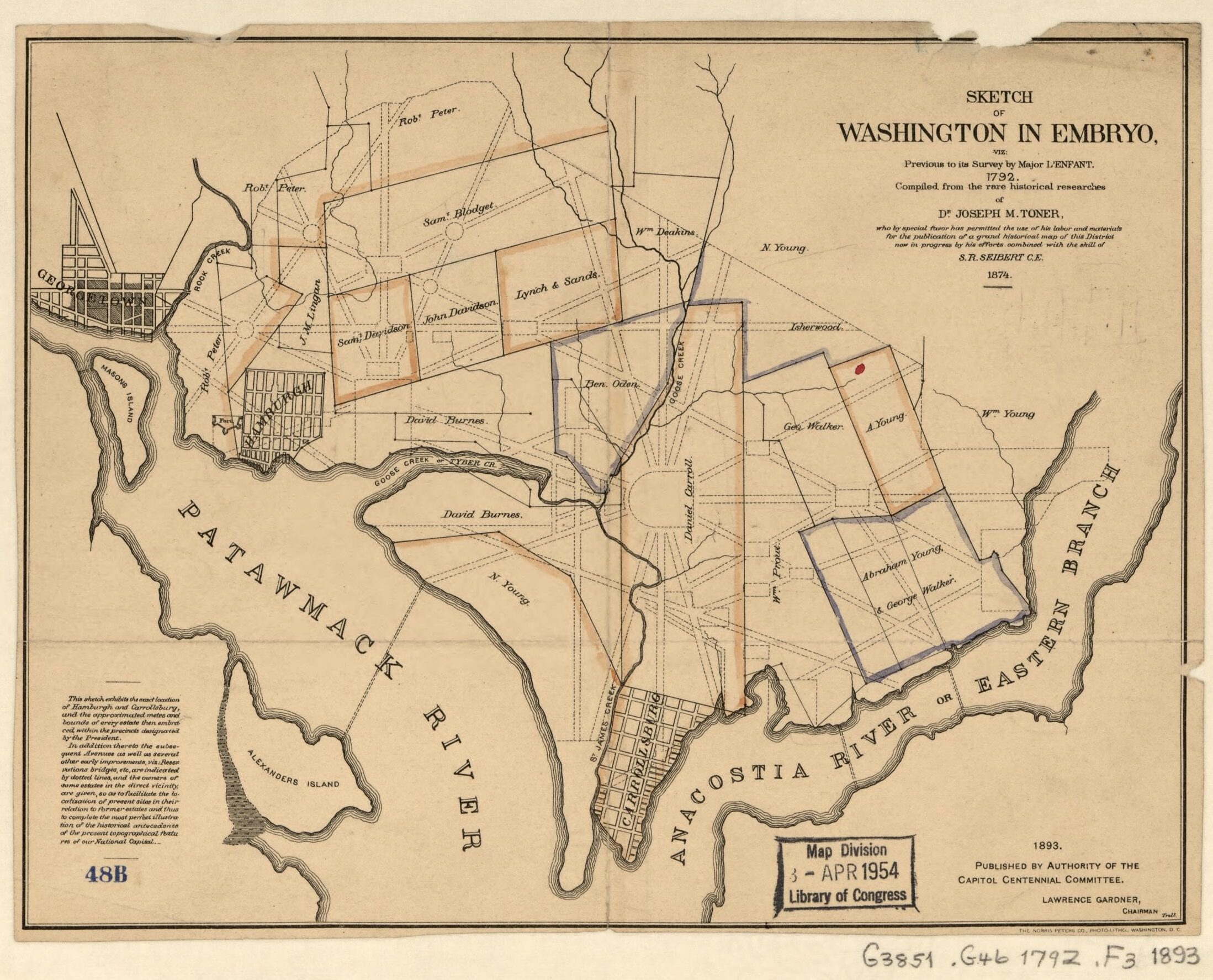
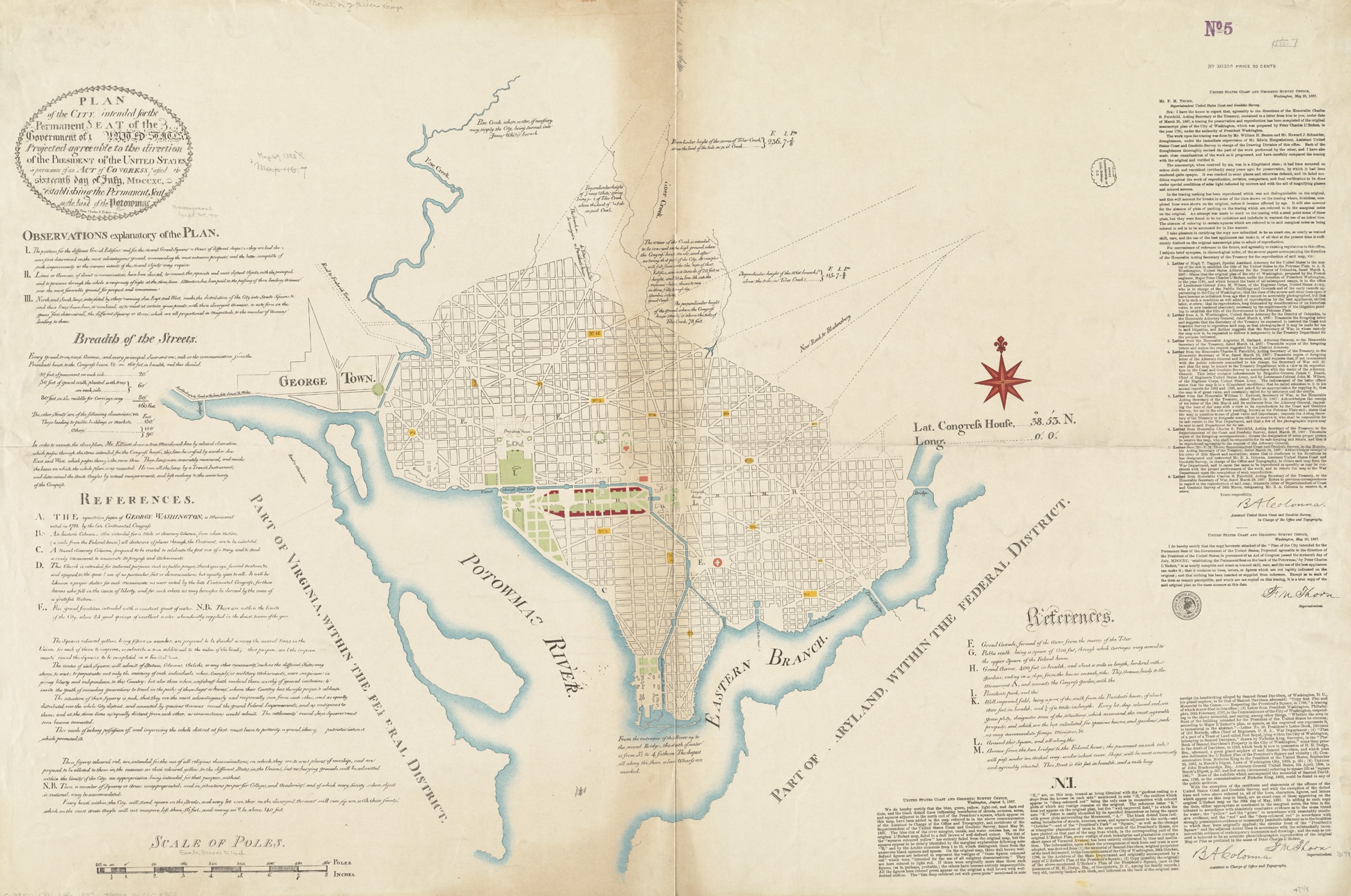
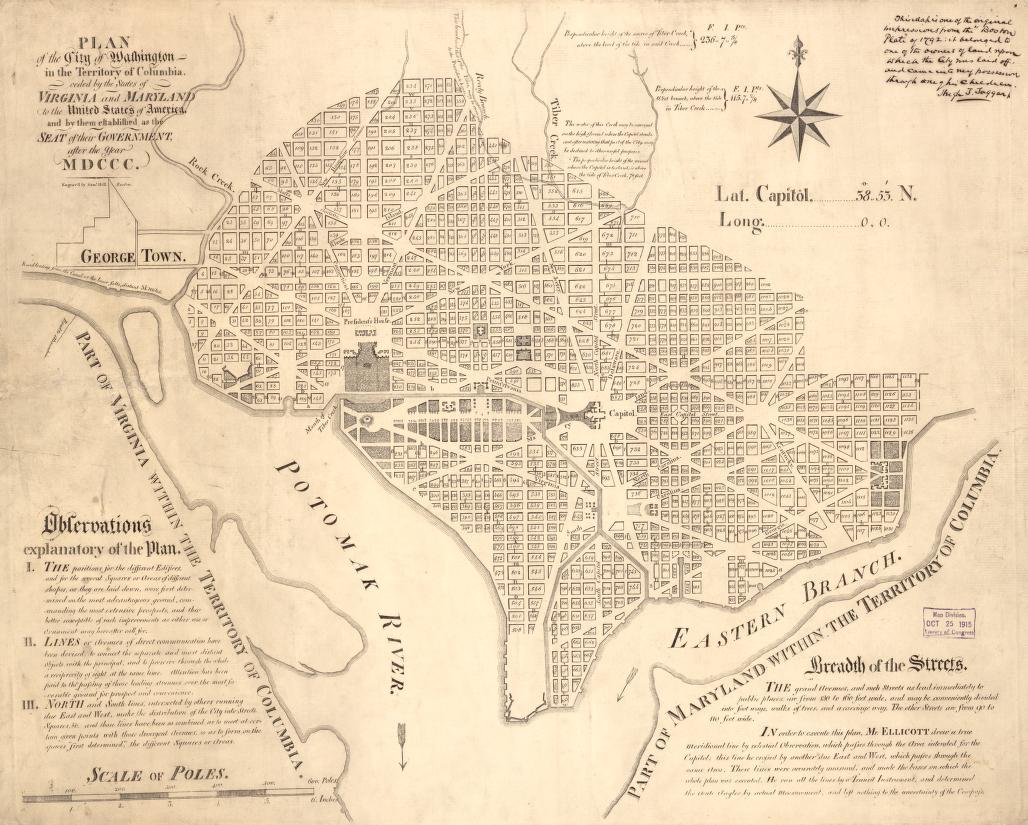
Once the location of the new capital had been established, it was now time to build a city from scratch. President Washington gave Pierre L’Enfant to prestigious opportunity to design a new city. L’Enfant served on General George Washington’s staff at Valley Forge.
Thomas Jefferson, then Secretary of State, sent L’Enfant a letter outlining his task, which was to provide a drawing of suitable sites for the federal city and the public buildings. Though Jefferson had modest ideas for the Capital, L’Enfant saw the task as far more grandiose, believing he was locating the capital, devising the city plan, and designing the buildings.
See Thomas Jefferson’s letter to L’Enfant.
L’Enfant’s “Plan of the city specified locations for two buildings, the “Congress House” (the United States Capitol) and the “President’s House” (now known as The White House). The “Congress House” would be built on “Jenkins Hill” (later to be known as “Capitol Hill”), which L’Enfant described as a “pedestal awaiting a monument”. The “President’s House” would be situated on a ridge parallel to the Potomac River.
The plan specified that most streets would be laid out in a grid. To form the grid, some streets (later named for letters of the alphabet) would travel in an east–west direction, while others (named for numbers) would travel in a north–south direction. Diagonal broader avenues, later named after the states of the Union, crossed the north–south-east/west grid. The diagonal avenues intersected with the north–south and east–west streets at circles and rectangular plazas that would later honor notable Americans and provide open space
L’Enfant laid out a 400 feet (122 m)-wide garden-lined “grand avenue”, which he expected to travel for about 1 mile (1.6 km) along an east–west axis in the center of an area that would later become the National Mall. He also laid out a narrower avenue (Pennsylvania Avenue) which would connect the “Congress House” with the “President’s House”.
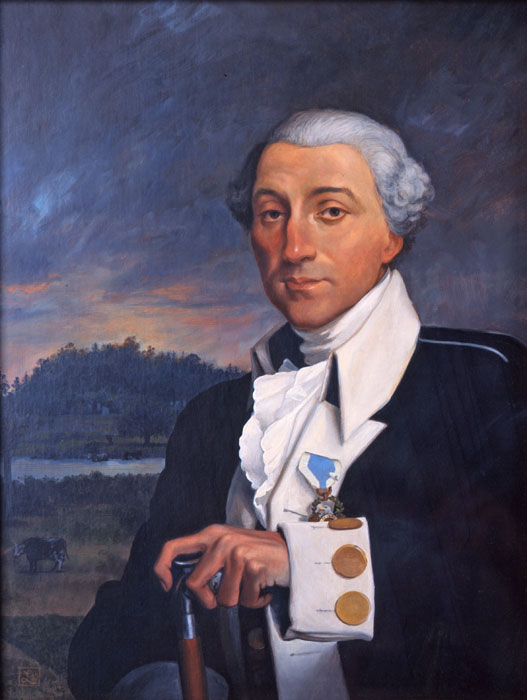
Who was Pierre L'Enfant?
Pierre L’Enfant was born in Paris on August 2, 1754, the son of an artist. L’Enfant studied art at the Royal Academy from 1771 until 1776, when he left school in France to help the Americans in their fight against the British.
He arrived in 1777 at the age of 23, and served as a military engineer in the Continental Army with Major General Lafayette. Despite his aristocratic origins, L’Enfant closely identified with the United States and changed his his first name from Pierre to Peter. L’Enfant served on General George Washington’s staff at Valley Forge.
Following the war, L’Enfant established a successful and highly profitable civil engineering firm in New York City. He achieved some fame as an architect by redesigning the City Hall in New York for the First Congress of the United States.
L’Enfant also designed furniture and houses for the wealthy, as well as coins and medals.